What Magnification Do You Need for Model Building? A Diopter and Working Distance Chart
Published How we research
For most scale model work you need between 1.75x and 2.5x magnification, which puts your eyes roughly 8 to 14 inches (20 to 35 cm) from the part. Go higher only for short inspection jobs: every step up in power brings the lens closer to the work and shrinks the area you can see in focus. The charts below convert diopters to magnification and working distance for magnifying lamps and for headband visors, then match each level to common bench tasks such as decals, cockpit painting and photo-etch.
Diopter to magnification chart for magnifying lamps
Lamp lenses are rated in diopters. Two simple formulas turn that number into something useful: magnification is the diopter value divided by 4, plus 1, and the focal length in millimeters is 1000 divided by the diopter value. The focal length is roughly the distance between the lens and the part when the image is sharp.
The common ratings work out as follows. A 3 diopter lens gives 1.75x and focuses at about 13 inches (33 cm). A 5 diopter lens gives 2.25x and focuses at about 8 inches (20 cm). An 8 diopter lens gives 3x at about 5 inches (12.5 cm). A 12 diopter lens gives 4x at just over 3 inches (8 cm). Bifocal lamps add a small high-power insert, often 12 diopters or more, inside a 3 or 5 diopter main lens for quick close inspection.
Be cautious with large X numbers printed on wide desk lenses. By the same formula a true 10x lens would be about 36 diopters and would have to sit close to an inch from the part, which leaves no room for a brush. When a listing states the diopter value, use that figure to compare lamps instead of the headline magnification.
Headband magnifier lens chart
Headband visors are sold by magnification, and each power has a fixed focal distance. The standard lens plates are: 1.5x at 20 inches (51 cm), 1.75x at 14 inches (36 cm), 2x at 10 inches (25 cm), 2.5x at 8 inches (20 cm), 2.75x at 6 inches (15 cm) and 3.5x at 4 inches (10 cm). Your head has to stay at that distance from the part for the image to be sharp.
Budget LED headsets usually ship with four or five interchangeable lenses covering about 1.0x to 3.5x, and they follow the same pattern: the stronger the lens, the closer you work. Some let you stack two lenses for more power, at the cost of an even shorter distance and a dimmer, narrower view. A set of swappable lenses is useful when you are not yet sure which power suits your eyes and your bench height.
Which magnification suits which modeling task
General assembly, sprue cleanup and seam sanding are comfortable at 1.5x to 1.75x. At a working distance of 14 to 20 inches you can sit upright, see the whole subassembly and still have room for cutters and files. This is also the range to choose if you only need help with eye strain over a long session.
Decals, canopy masking, cockpit detail painting and panel lining are easier at 2x to 2.5x. The 8 to 10 inch working distance still clears a brush handle or a pair of tweezers, and small stencils become readable. For most builders in 1:72 and 1:48 this is the everyday range, which is why 2.25x lamp lenses and 2x to 2.5x visor plates are the usual recommendation.
Photo-etch folding, rigging, 1:700 ship fittings and figure faces in small scales benefit from 2.5x to 2.75x. Anything from 3.5x upward is best treated as an inspection lens: useful to check a seam, a decal edge or a paint chip, but too close and too narrow for sustained work with tools in both hands.
Why more magnification is not better
Three things get worse as power goes up. Working distance shrinks, so at 3.5x you have about 4 inches between lens and part, not enough to swing a brush or reach in with an airbrush. Field of view narrows, so you see a wing root instead of the whole wing and lose track of where your tool is. Depth of field becomes shallow, so a small movement of your head or the model throws the image out of focus.
High power also magnifies hand tremor and pulls you into a hunched posture, because your head has to stay at the focal distance. A lower power that you can use for an hour with a straight back produces better work than a strong lens you can only tolerate for five minutes. If you are unsure between two strengths, choose the weaker one and add a small high-power lens for inspection.
Lamp or headband: how the choice changes the numbers
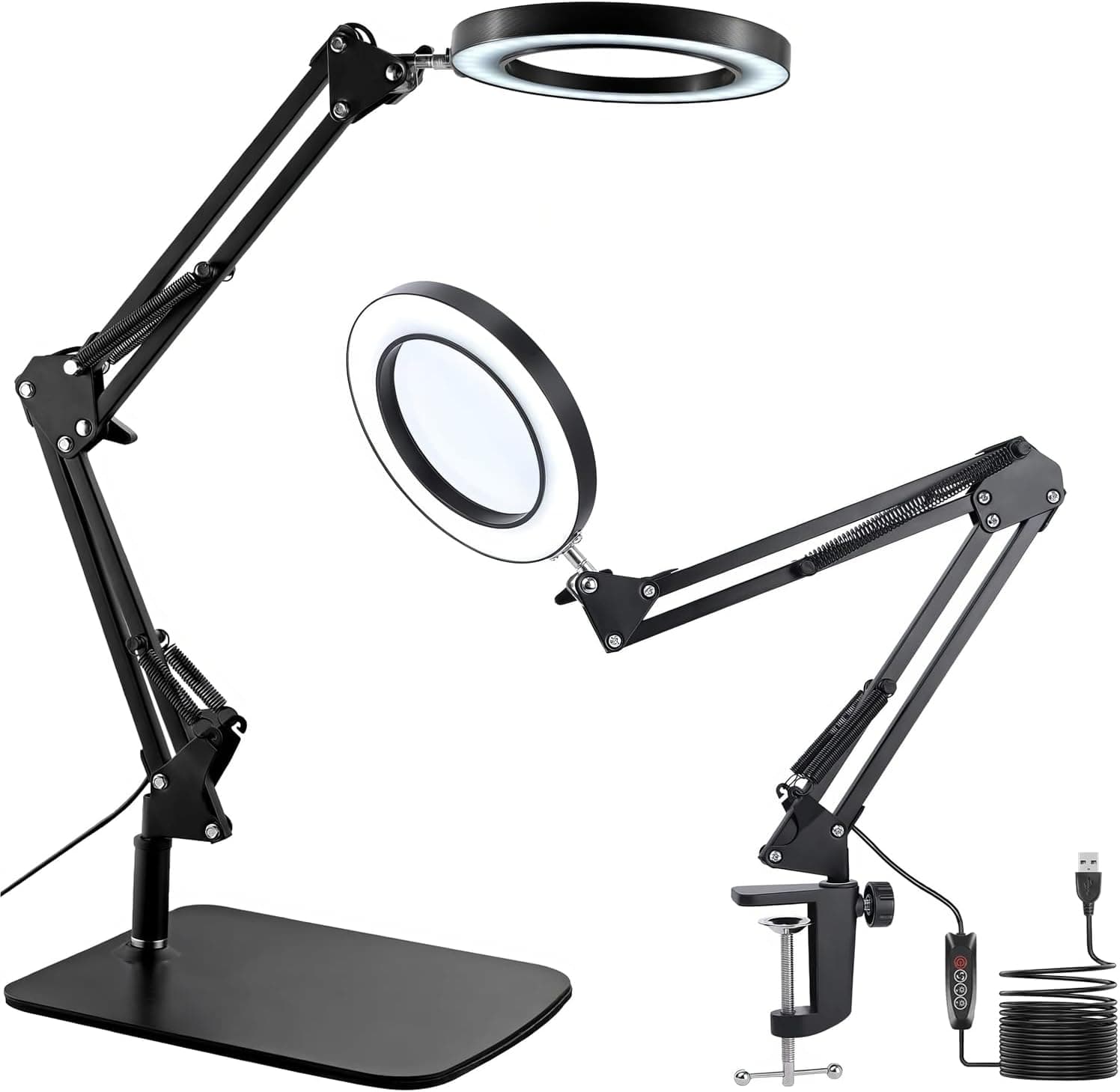
A magnifying lamp keeps the lens fixed over the bench and you bring the model to it. The lens is wide enough to use with both eyes, the light is built in, and you can glance past the lens at paint jars and instructions without moving anything. The trade-off is that lamp lenses are mostly limited to 3 or 5 diopters, 1.75x or 2.25x, so they suit general work more than fine detail.
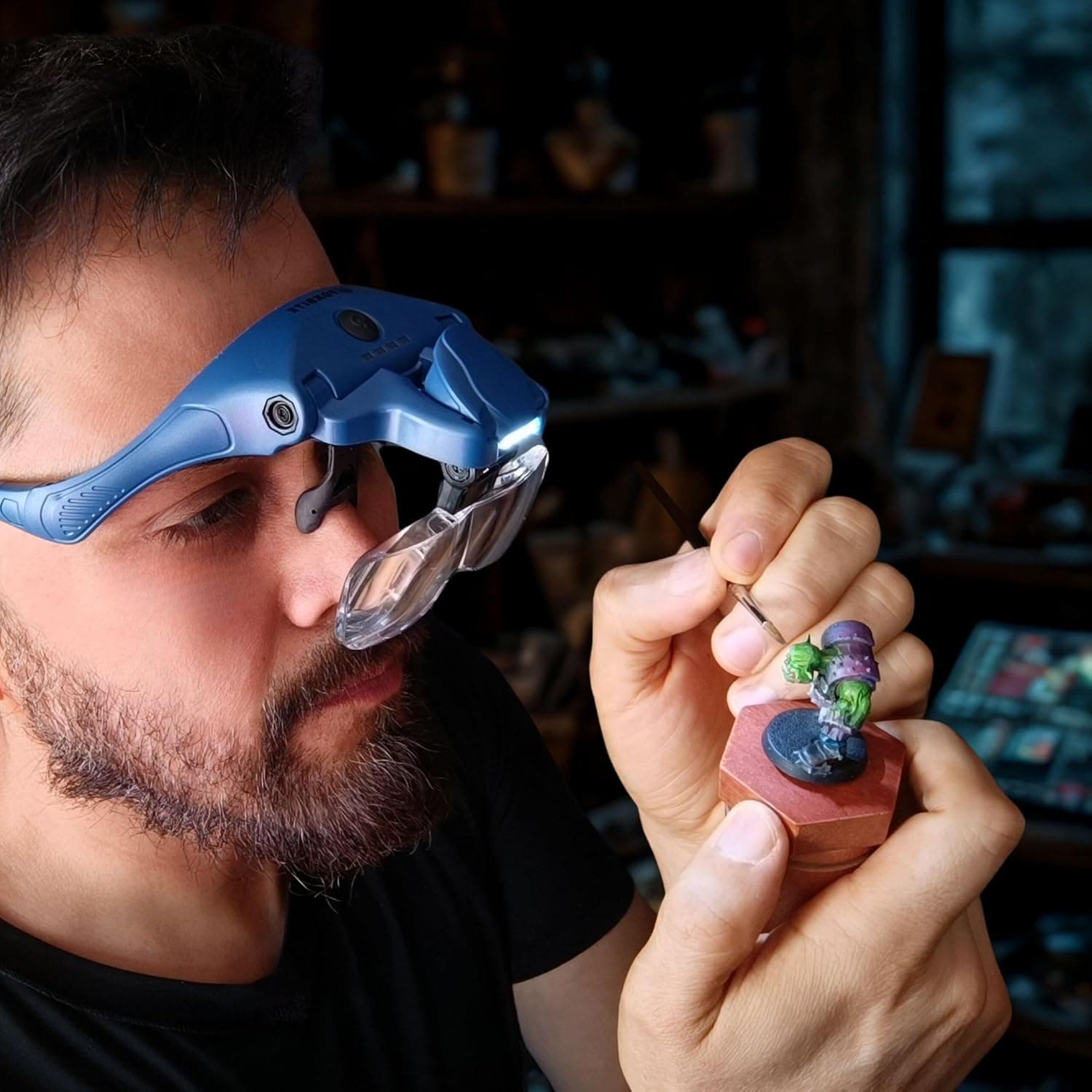
A headband visor moves with your head, so the magnified view follows you around the model and works with any light source. It reaches higher powers, flips up when you do not need it, and fits over prescription glasses. You control focus by moving your head, which takes a little practice. Whichever type you use, pair it with good light: a daylight color temperature around 5000 K and a color rendering index of 90 or higher help when you judge paint colors.
Frequently asked questions
Is 2x magnification enough for 1:72 scale models? For assembly, decals and most painting, yes. A 2x to 2.5x lens at 8 to 10 inches covers nearly all 1:72 work. Keep a stronger lens of 2.75x to 3.5x on hand for brief checks of very small parts.
What does 5 diopter mean on a magnifying lamp? It describes the lens strength. A 5 diopter lens focuses at 200 mm, about 8 inches, and gives 2.25x magnification using the usual formula of diopter divided by 4, plus 1.
Can I use reading glasses instead of a hobby magnifier? Often, yes. Reading glasses are also rated in diopters, and a +3.00 pair focuses at roughly 13 inches for a relaxed eye, similar to a 3 diopter lamp lens. They are a cheap first step, but they have no flip-up function and no built-in light.
Why does the image blur when I move slightly? Depth of field gets shallower as magnification rises, so the zone that is sharp may be only a fraction of an inch deep at 3.5x. Dropping to a lower power or steadying your elbows on the bench makes the view easier to hold.
Products from this article
The highest-scoring picks from the buying guides mentioned above. Scores are our editorial assessment, not customer ratings.
+ 5 lenses let you switch magnification for each task
From our guide: Best Magnifiers for Scale Modeling
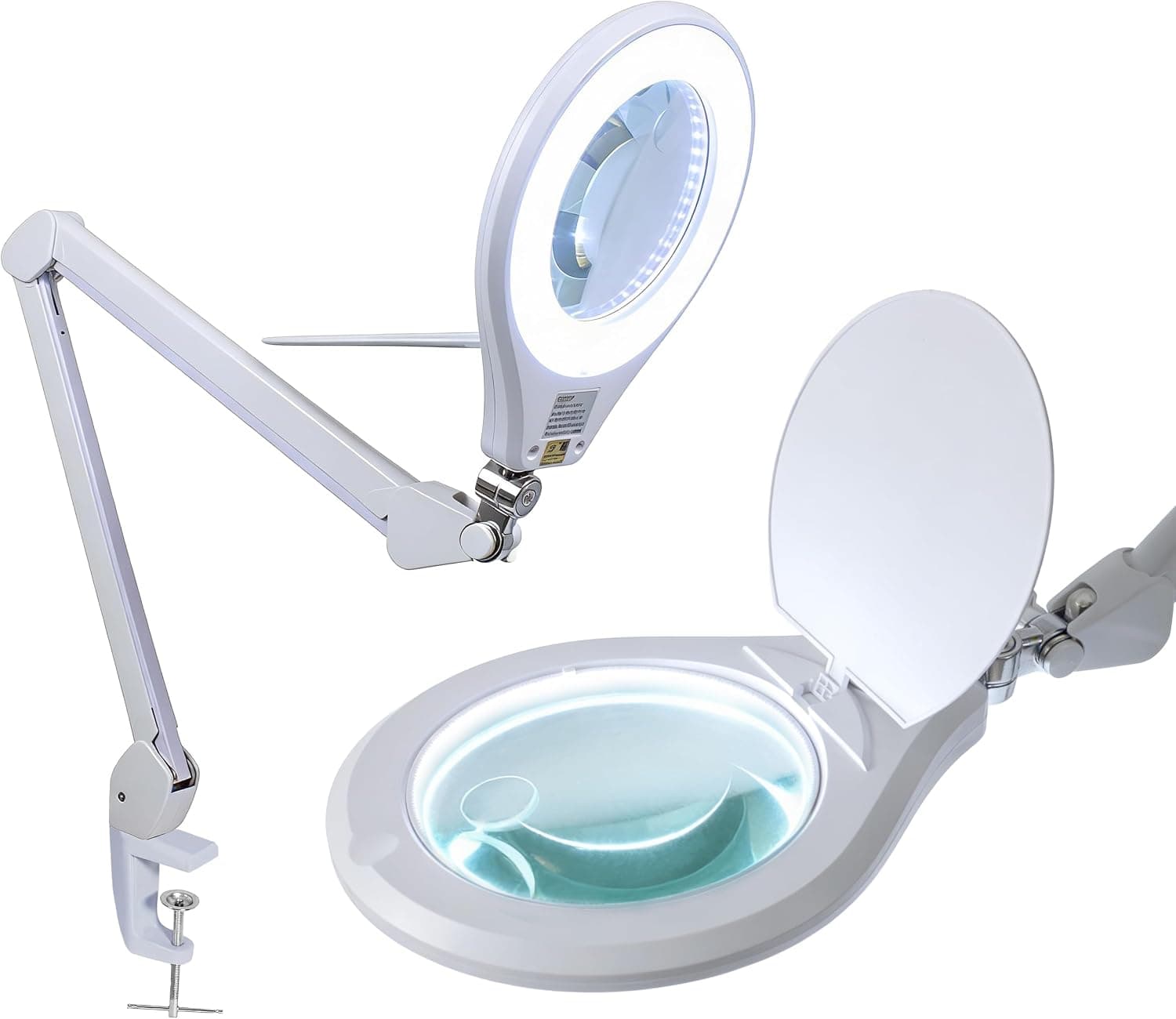
+ Glass lens is clearer and more scratch resistant than acrylic
From our guide: Best Hobby Lamps for Model Building
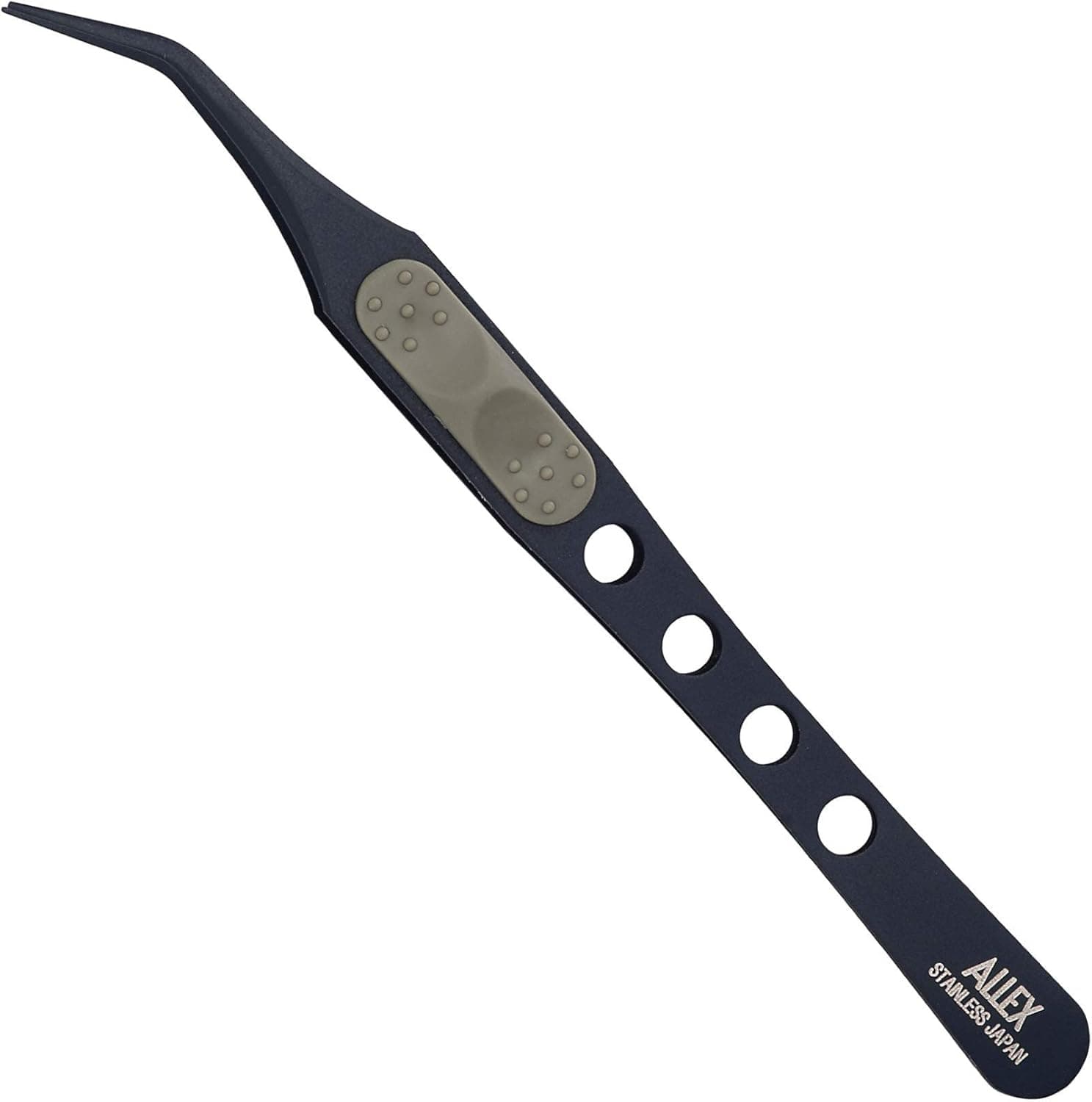
+ Non-stick coating keeps stickers and decals from clinging
From our guide: Best Tweezers for Decals and Fine Parts
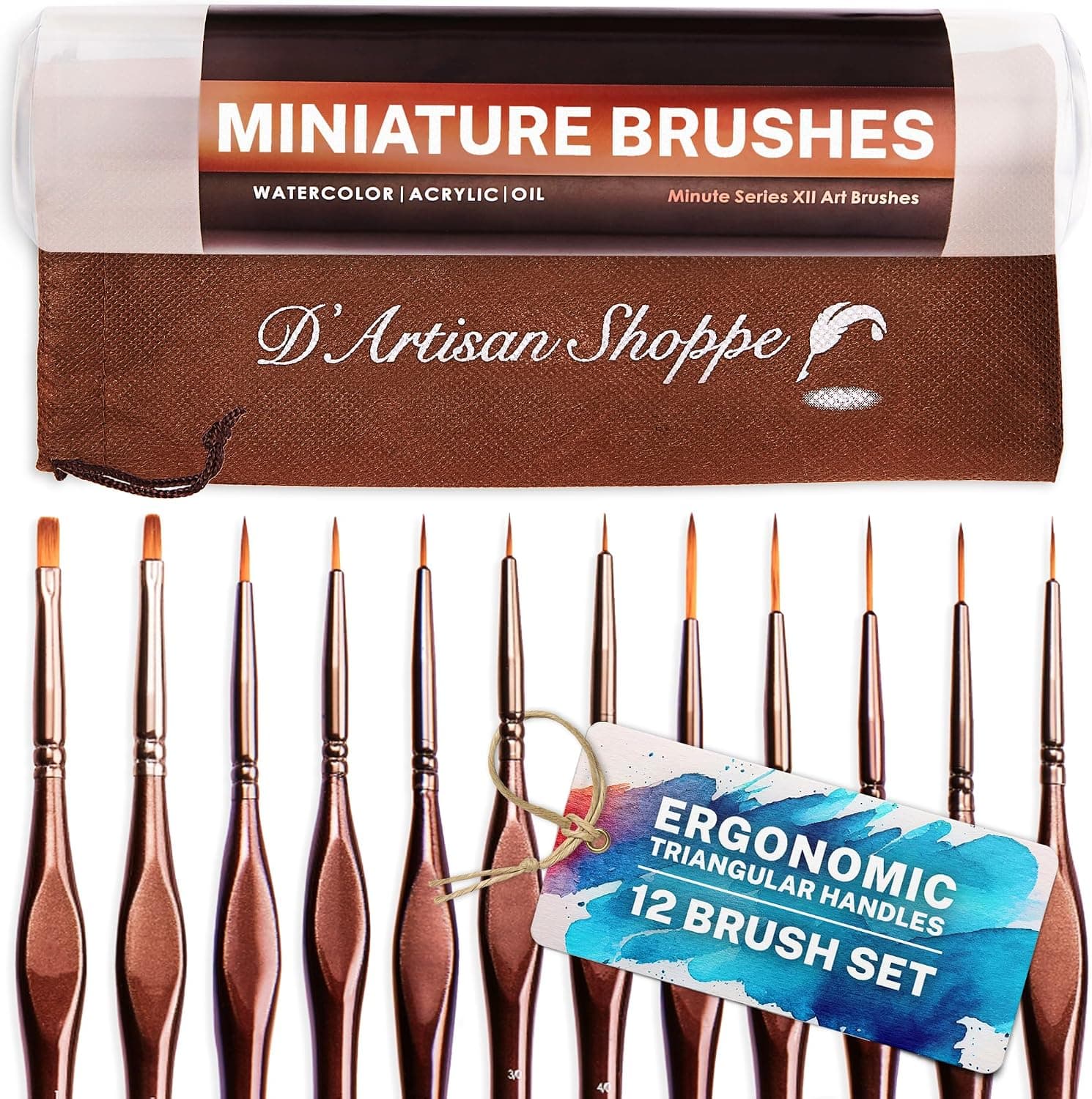
+ 12 brushes give a wide selection of sizes and shapes
From our guide: Best Brush Sets for Model Painting: Detail Brushes That Keep Their Point
Popular right now
- Best Magnifiers for Scale ModelingBuying guide
- Gluing Model Kits Without MessArticle
- Applying Decals ProperlyArticle
- Best Airbrush Cleaners for ModelersBuying guide
- Best Brush Sets for Model Painting: Detail Brushes That Keep Their PointBuying guide
- Best Model Ship Kits: Top Picks for Scale ModelersBuying guide
Based on the last 28 days of search and visitor data.