Tamiya 35216 1/35 German Tiger I Early Production Tank Plastic Model Kit Review (2026)
Updated September 14, 2026 · Research-based review
Our verdict
Tamiya's 1/35 Tiger I Early Production suits builders who want an accurate early war Tiger with straightforward assembly and strong reference support. The clear build sequence handles the overlapping road wheels well, though they take patience to paint. Skip it if you already own several Tiger kits.
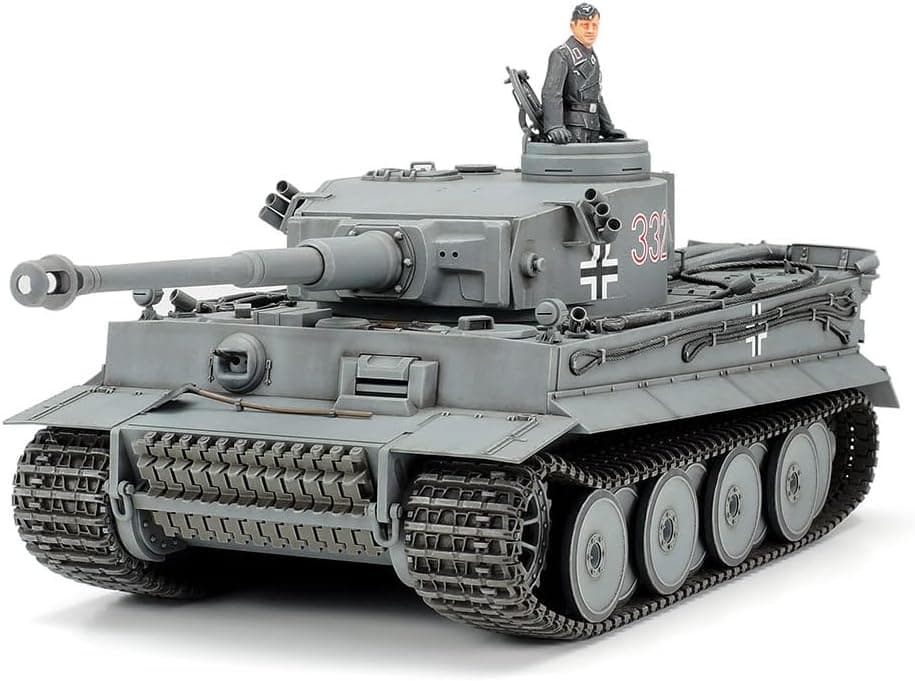
A 1/35 German Tiger I early production kit from Tamiya for builders who want the classic WWII heavy tank.
Price range: See on Amazon
What we liked
- + Early production details distinguish it from later Tiger variants
- + Tamiya's clear steps make the running gear easier to line up
- + Iconic subject has extensive reference material for accurate painting
Trade-offs
- - Interleaved road wheels take time to assemble and paint neatly
- - Tiger kits are everywhere, so it may feel less unique on display
Who this Tiger I kit is for
Tamiya's 1/35 Ger. Tiger I Early Production recreates the German heavy tank in its formative 1942 to 1943 configuration, before the mid and late production changes that most other Tiger kits depict. It suits modelers who already know their way around styrene armor kits and want a specific early war variant rather than a generic Tiger. The early cupola, smoke dischargers and large pistol port set this boxing apart from Tamiya's other Tiger I releases, so it appeals to collectors building a production timeline of the tank as much as to newcomers to German armor. Because the subject is so well documented, it also works for painters who want abundant photo references for camouflage schemes, markings and weathering, since six marking options are included in the box.
Scale, size and what's in the box
At 1/35 scale the finished tank measures about 9.5 inches long, 4.25 inches wide and 3.25 inches tall, a comfortable shelf size next to other 1/35 armor. The kit includes a figure and decals for six marking schemes, giving builders room to pick a specific unit and paint job without buying aftermarket sheets. A length of fabric tubing is provided for the engine deck exhaust routing, a detail some builders find tricky to trim neatly since the material frays at the cut edge. Tamiya's instructions also mark where photo etched engine deck grilles can go, though those parts are not included and have to be sourced separately if you want a finer mesh look instead of the molded plastic grilles.
Building and finishing the model
Assembly follows Tamiya's usual logical sequence, and the running gear is the main test of patience because the Tiger's interleaved road wheels overlap in rows that have to be lined up and painted before the tracks go on. Working in stages, painting the inner wheels before adding the outer rows, keeps the wheel wells from turning into a fiddly mess later. The hull and upper details go together with the tight, predictable fit Tamiya is known for, so seams and filler work stay minimal on the main structure. Because the subject has been photographed and studied extensively, builders have an unusually large pool of reference photos to check panel lines, weld seams and stowage placement against, which helps with both accuracy and confidence when painting and weathering.
How it compares with other Tiger and armor kits
Within Tamiya's own tank kit guide the Tiger I Early Production sits at the top alongside the 35346 M4A3E8 Sherman Easy Eight, both scoring well for fit and build quality, while Tamiya's own King Tiger kit trails slightly and budget options from Airfix and Academy rank lower on features and materials. The trade off with any Tiger I is how common the subject is. Because so many companies have released Tiger kits over the decades, an early production build has to compete for shelf space with other builders' Tigers at shows and in photos, so unique markings or a specific unit history help it stand out. Builders who want a less crowded subject might prefer the Sherman Easy Eight or a lighter vehicle like the M5A1 for variety.
Verdict and who should look elsewhere
This is a strong pick for anyone building a WWII German armor collection who wants the early war Tiger I specifically, and Tamiya's engineering keeps the build approachable despite the complex suspension. Painters get real benefit from the six marking options and the wealth of published reference material on this exact tank. Builders who already have a Tiger I in their collection, or who want a rarer subject with less competition on the shelf, may get more satisfaction from a different vehicle such as the King Tiger or a lend lease American tank. Anyone assembling their first armor kit should still expect to spend real time on the road wheels before moving on to painting and weathering.
Frequently asked questions
Does the Tamiya Tiger I Early Production kit include photo etched parts?
No. The instructions show where photo etched engine deck grilles can be added, but Tamiya does not include them in this boxing, so builders who want that detail need an aftermarket photo etch set.
How many marking options come with this kit?
The kit includes decals for six different early production Tiger I marking schemes, giving builders several unit and paint options without needing extra decal sheets.
What is the finished size of the model?
At 1/35 scale the assembled tank measures about 9.5 inches long, 4.25 inches wide and 3.25 inches tall.
Is this kit suitable for a first armor build?
It can work for a motivated beginner, but the interleaved road wheels take real patience to assemble and paint cleanly, so some modelers prefer to start with a simpler armor kit first.
Prices change often, so check the current price and availability on Amazon.
Check price on AmazonModel Build Lab may earn a commission from the link above.