Plastruct Plastic Weld with Applicator 2oz Bottle Review (2026)
Updated September 14, 2026 · Research-based review
Our verdict
Plastruct Plastic Weld suits scratch-builders and railroad modelers welding styrene, ABS or acrylic sheet who need a stronger bond than a typical hobby cement. The main strength is a true solvent weld that fuses mixed plastics solidly; the trade-off is strong fumes that call for real ventilation.
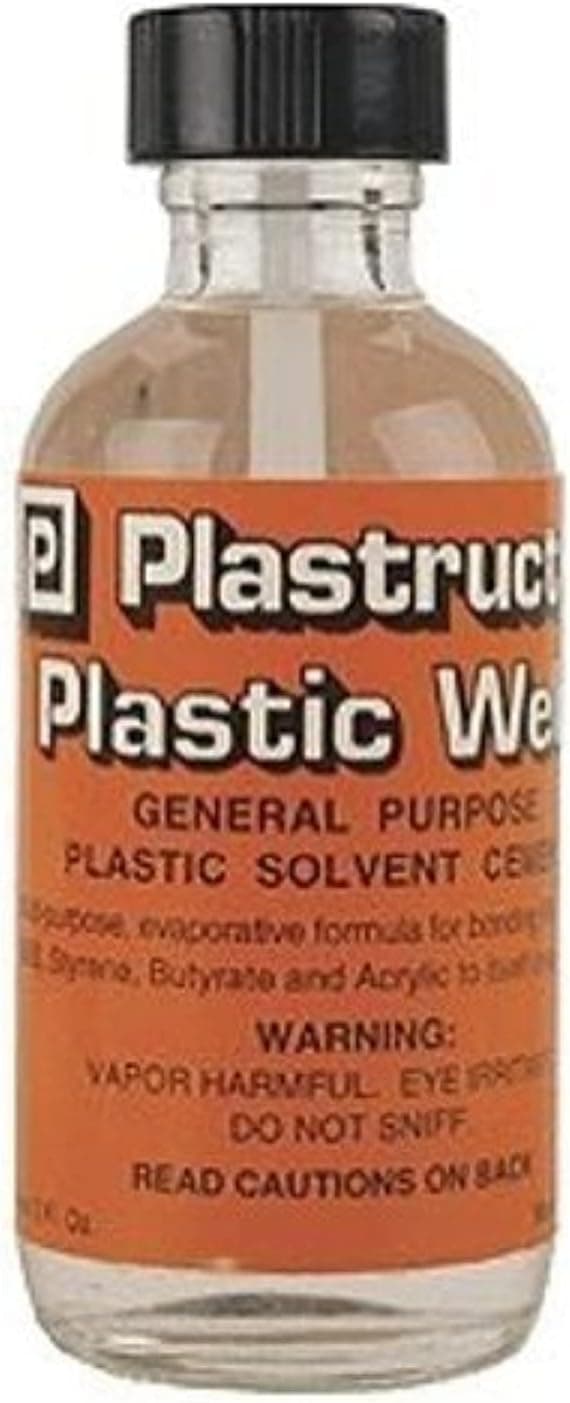
Plastruct Plastic Weld with applicator in a 2oz bottle, a strong solvent cement for styrene, ABS and scratch-building.
Price range: See on Amazon
What we liked
- + Powerful solvent welds styrene and ABS for tough joints
- + Applicator helps place glue accurately on small parts
- + Popular with scratch-builders and model railroaders
Trade-offs
- - Strong fumes require good ventilation during use
- - Aggressive solvent can mar surfaces if spilled
Who this solvent weld is built for
Plastic Weld is built for scratch-builders and model railroaders working with styrene, ABS and acrylic sheet rather than builders assembling an injection-molded kit straight from the box. Its ability to bond mixed plastics, ABS to Butyrate or ABS to Acrylic among them, is exactly the kind of joint a typical hobby cement is not formulated for, which is why it shows up often in structure and diorama building where sheet plastic gets cut and joined into custom shapes. Builders gluing standard styrene kit parts together will usually get an easier, milder result from a Tamiya-style thin cement instead.
How the weld works and what is in the box
It comes in a 2 fluid ounce bottle with an applicator brush built into the cap, so no separate tool is needed to apply it. As a true solvent cement, it dissolves a thin film of the plastic surfaces being joined so they fuse together as the solvent evaporates, rather than just gluing two surfaces with an adhesive layer between them. It becomes tacky almost immediately and sets within minutes, and applied along a tight seam it can also act as a liquid filler, flowing in by capillary action to fill small gaps as it welds the joint closed.
Using it safely on the bench
Because it is a strong solvent, work in a ventilated space and avoid prolonged skin contact, and keep it away from finished surfaces or painted parts since the solvent can mar or craze plastic it was not meant to touch. Apply a thin line with the built-in brush along the joint rather than flooding the seam, since the fast tack time means excess glue has little time to be wiped away cleanly. It is rated for indoor and outdoor use, which fits its common role in larger scratch-built structures and railroad scenery pieces that may sit outside a display case, and that outdoor rating is part of why layout builders reach for it over a hobby cement meant only for indoor display models.
Trade-offs against other plastic cements
Against Tamiya's Extra Thin Cement or Mr. Hobby's Mr. Cement line, Plastic Weld is a heavier duty product: stronger, faster tacking, and capable of bonding plastic types those thinner cements handle poorly, but with correspondingly stronger fumes and less forgiveness for a hesitant hand. For straightforward styrene kit assembly, the milder capillary cements remain easier to control. For scratch-building with ABS sheet, styrene sheet and acrylic together, Plastic Weld is closer to the standard choice, since few hobby cements are formulated to bond that range of materials at all, and reaching for a thin kit cement on ABS structural joints would likely leave a weaker bond than the material can support, especially on a load-bearing scratch-built frame rather than a lightweight display detail.
Verdict and who should use something milder
For scratch-builders, railroad modelers and anyone welding sheet styrene, ABS or acrylic into custom structures, Plastic Weld does a job that ordinary kit cements are not built for, and its built-in applicator keeps it easy to reach for on the bench. Builders assembling standard injection-molded kits, especially anyone newer to the hobby, should reach for a milder capillary cement instead, since Plastic Weld's strength and speed are more than a simple seam needs and add fume exposure that is not necessary for that kind of work. Keep it on hand specifically for sheet plastic and mixed material projects, and let a gentler cement handle everyday kit assembly where its extra strength brings no real benefit.
Frequently asked questions
What plastics does it bond?
It welds ABS to Butyrate, ABS to Styrene and ABS to Acrylic, along with other rigid plastic combinations common in scratch-building.
How fast does it set?
It becomes tacky almost immediately and sets within minutes, though full strength develops as the solvent finishes evaporating.
Can it be used as a gap filler?
Yes, applied along a tight seam it flows in by capillary action and can fill small gaps as it welds the joint.
Do I need ventilation to use it?
Yes, it is a strong solvent cement, so work in a ventilated area and avoid prolonged skin contact.
Prices change often, so check the current price and availability on Amazon.
Check price on AmazonModel Build Lab may earn a commission from the link above.