Brush Painting vs Airbrushing
Published How we research
Both brushes and airbrushes produce excellent finishes, and most experienced builders use both on every model. Brushes win on cost, simplicity, and detail work; smooth brushed coats are learnable by thinning to a milk-like flow and applying several light coats. Airbrushes win decisively on large smooth areas, translucent shading, and feathered camouflage, at the cost of 150 to 300 dollars plus cleaning and a spray booth. Start with brushes, learn paint itself first, and add an airbrush only when large surfaces are your specific frustration. Few debates in scale modeling generate as much anxiety as the choice between brushes and an airbrush. Newcomers often believe an airbrush is mandatory for good results, delay painting anything until they can afford one, and sometimes quit before they start. The reality is more balanced. Both tools produce excellent finishes in skilled hands, both have genuine weaknesses, and most experienced builders use the two together on every model.
Products from this article
The highest-scoring picks from the buying guides this article links to. Scores are our editorial assessment, not customer ratings.
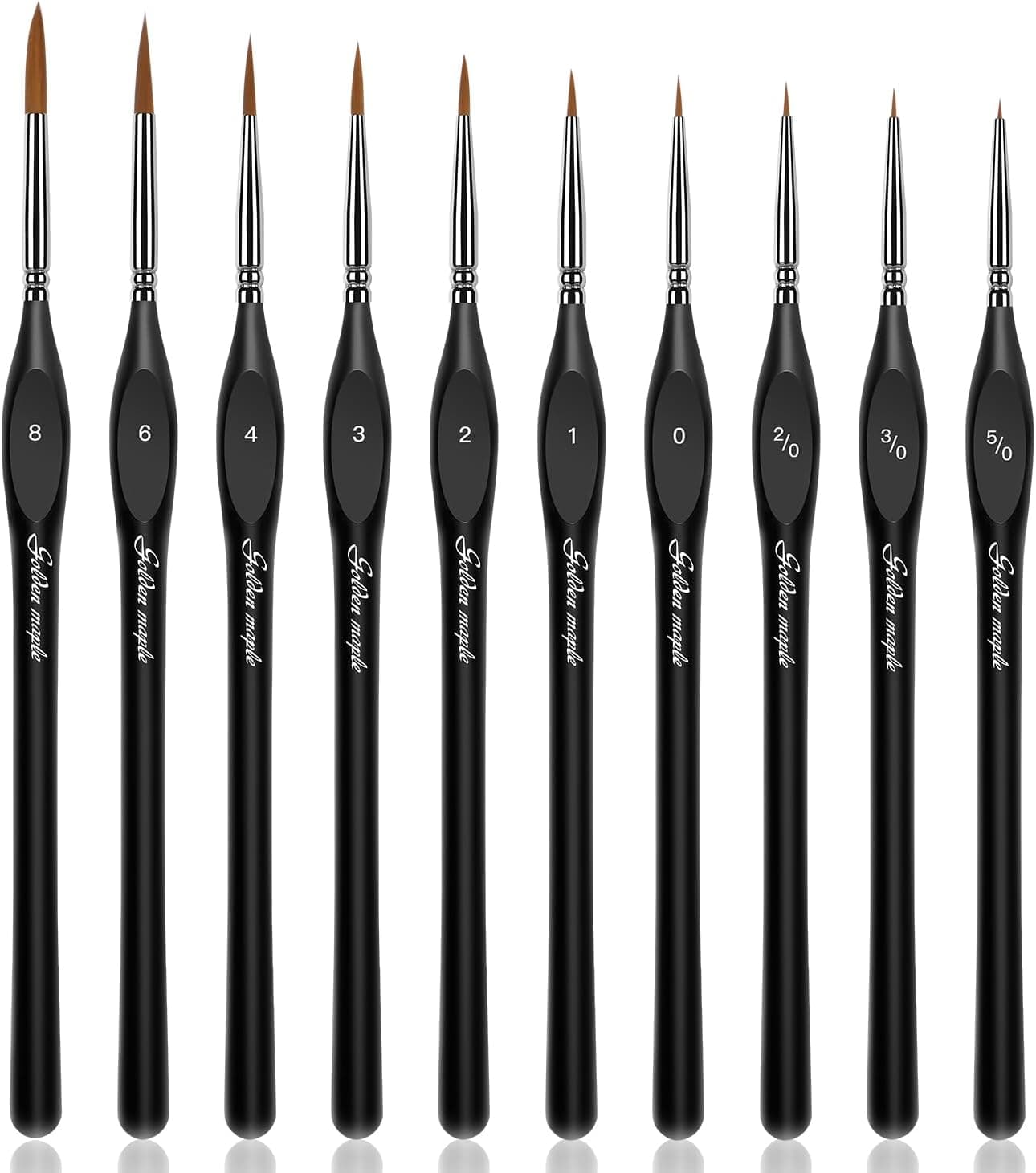
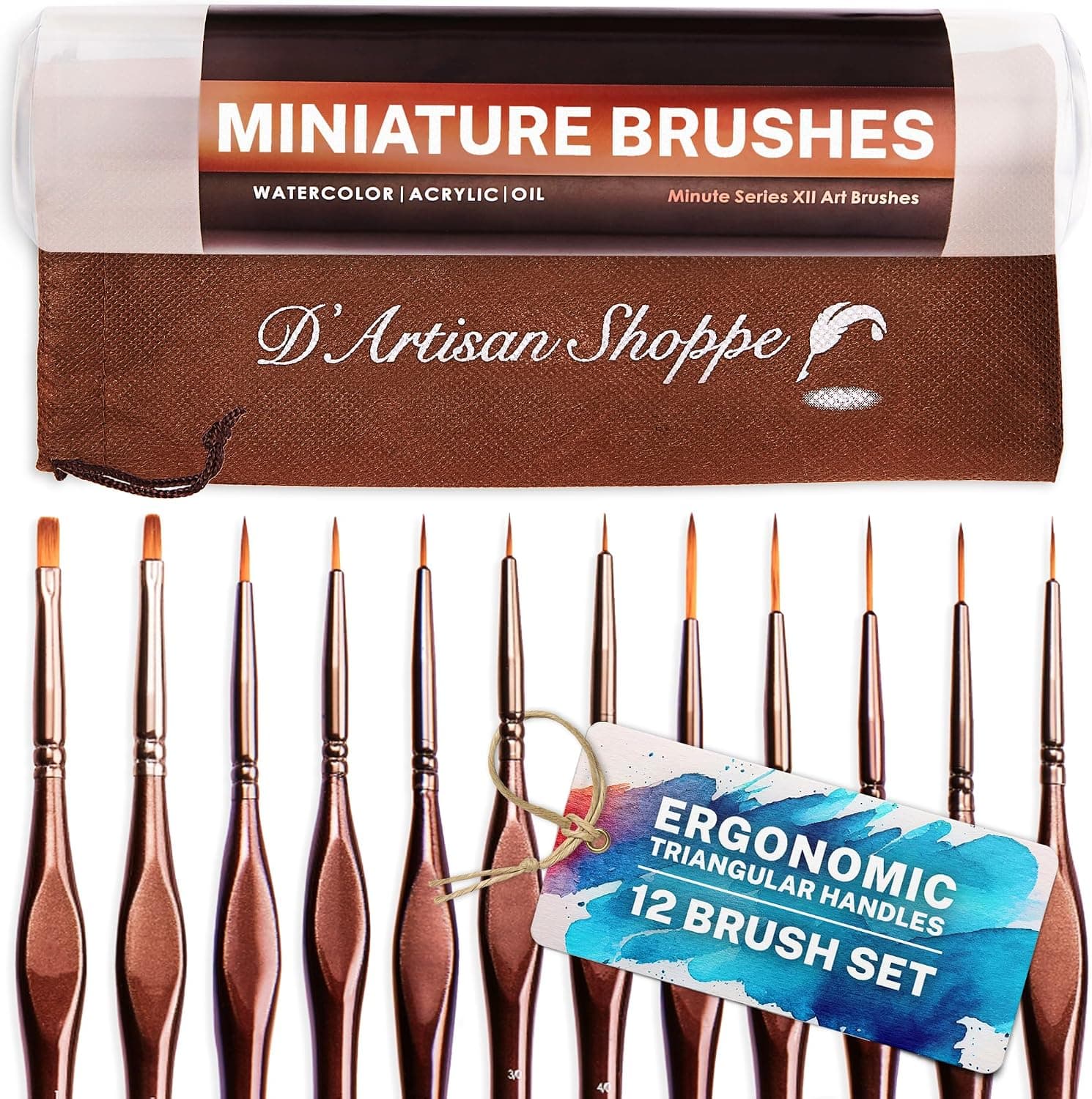
+ 12 brushes give a wide selection of sizes and shapes
From our guide: Best Brush Sets for Model Painting: Detail Brushes That Keep Their Point
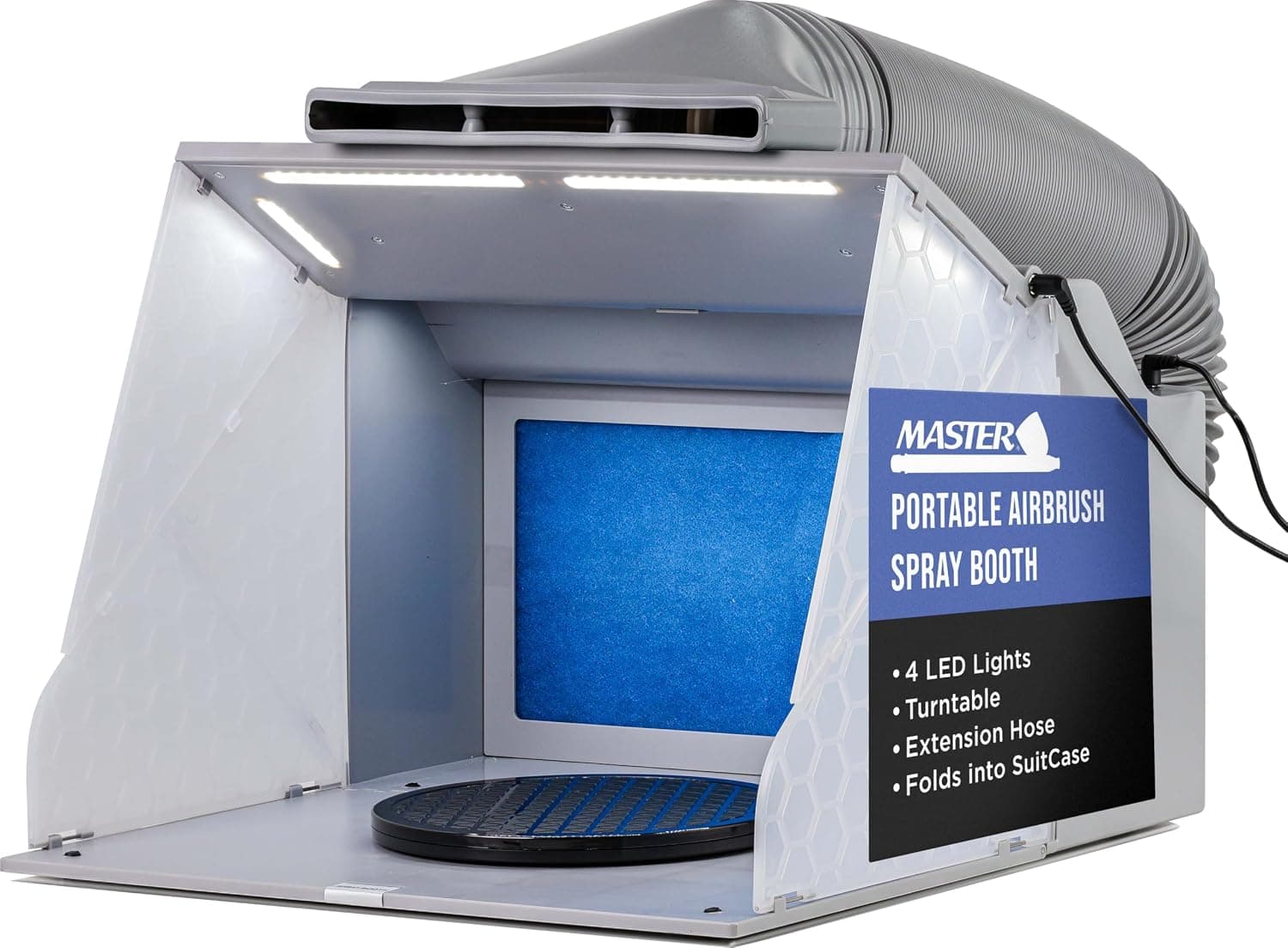
+ Dual exhaust fans pull overspray more strongly
From our guide: Best Spray Booths for Scale Modeling
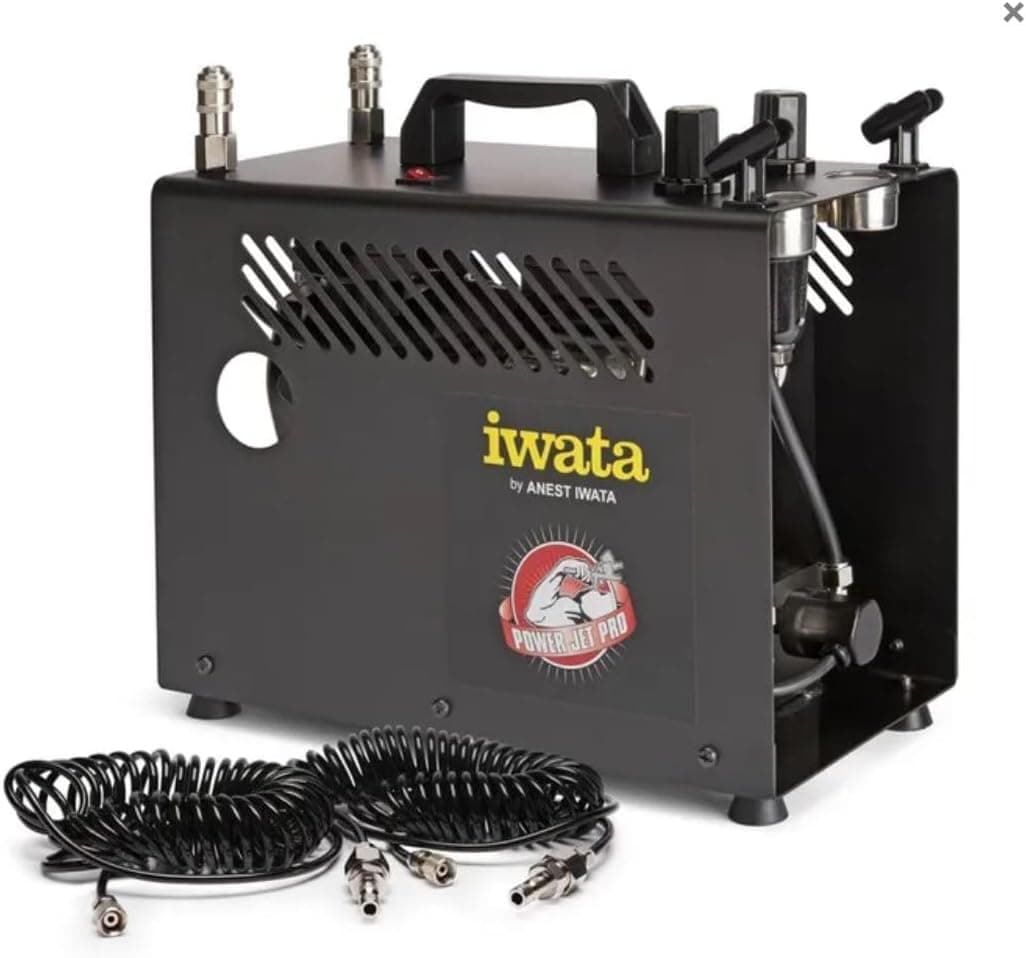
+ Power Jet Pro offers strong, steady airflow
From our guide: Best Airbrush Compressors for Model Building
+ Fifteen tips including liners from 4/0 to 1 and matching rounds cover panel lines, dials and trim
From our guide: Best Brush Sets for Model Painting: Detail Brushes That Keep Their Point
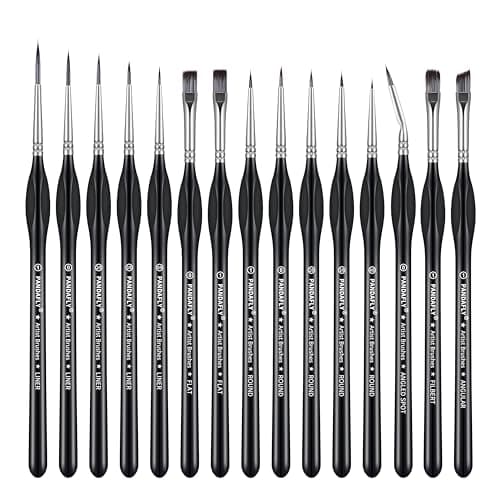
Brush painting wins on cost and simplicity
Brush painting wins decisively on cost and simplicity. A set of three quality brushes costs less than twenty dollars, requires no compressor, no spray booth, and no ventilation planning, and cleans up in a minute. It excels at detail work, from cockpit instruments to figure faces, where an airbrush is clumsy. The technique for smooth brushed coats is learnable: thin the paint until it flows like milk, apply several light coats rather than one heavy one, work quickly without rebrushing tacky paint, and let each coat dry fully. Modern acrylics formulated for brushing level out remarkably well.
Where brush painting struggles
Brush painting struggles most with large smooth areas and soft-edged effects. A car body, an airliner fuselage, or a subtle camouflage gradient will test a brush painter severely, because brush marks and overlap lines show most on broad monochrome surfaces. Workarounds exist, including spray cans for base coats and drybrushing for blends, but this is honest territory where the airbrush is simply the better tool.
What airbrushing delivers, and what it costs
Airbrushing delivers flawlessly smooth coats, translucent layers for shading effects, and feathered camouflage edges no brush can match. Paint goes down in coats thin enough to preserve fine surface detail, and large areas that take an evening to brush take minutes to spray. The costs are equally real. A decent starter airbrush and compressor run 150 to 300 dollars, every session ends with disassembly and cleaning, and you must manage overspray and fumes with a spray booth or good ventilation. There is also a genuine learning curve of clogs, spatters, and paint-thinning experiments before consistent results arrive.
The practical answer for beginners
The practical answer for beginners is to start with brushes and learn paint itself first. Thinning ratios, coat thickness, drying times, and color behavior are prerequisites for airbrushing anyway, and brush skills never stop being useful. Build three or four kits with brushes alone. If you find yourself frustrated specifically by large surfaces and smooth finishes rather than by painting generally, that is the signal an airbrush will actually solve your problem rather than becoming an expensive shelf ornament.
How the two tools settle into natural roles
When you do add an airbrush, the two tools settle into natural roles. The airbrush handles priming, base coats, camouflage, varnishes, and broad tonal shading. The brush handles details, touch-ups, washes, drybrushing, and figures. Neither replaces the other, and the builders who produce the finishes beginners admire are almost always fluent with both. Choose based on the models you want to build this year, not on what contest winners use, and remember that an unpainted kit benefits from neither tool.
Frequently asked questions
Do I need an airbrush to paint scale models well? No. Brushes produce excellent finishes in skilled hands and excel at detail work. Start with brushes, build three or four kits, and add an airbrush only if large smooth surfaces are your specific frustration.
How do I get a smooth finish with a brush? Thin the paint until it flows like milk, apply several light coats rather than one heavy one, work quickly without rebrushing tacky paint, and let each coat dry fully.
When is an airbrush actually worth it? For large smooth areas like car bodies and airliner fuselages, translucent shading layers, and feathered camouflage edges no brush can match.
What does a starter airbrush setup cost? A decent airbrush and compressor run about 150 to 300 dollars, plus a spray booth or good ventilation for overspray and fumes, and there is a learning curve of clogs and thinning experiments.
Popular right now
- Best Magnifiers for Scale ModelingBuying guide
- Best Modeling Putty: Fill Seams and Gaps Like a ProBuying guide
- Best Airbrush Cleaners for ModelersBuying guide
- Best Hobby Lamps for Model BuildingBuying guide
- Best Brush Sets for Model Painting: Detail Brushes That Keep Their PointBuying guide
- Restoring Old Model KitsArticle
Based on the last 28 days of search and visitor data.