Testor Model Master 8876C Clear Parts Cement and Window Maker, 1/2 fl. Oz. Review (2026)
Updated September 20, 2026 · Research-based review
Our verdict
This 1/2 fl. oz. bottle of Testors clear parts cement is built for attaching canopies, windshields and lenses without the crazing or yellowing that regular cement causes. It doubles as a way to form tiny clear windows from scratch, though the small bottle runs out fast on a busy build.
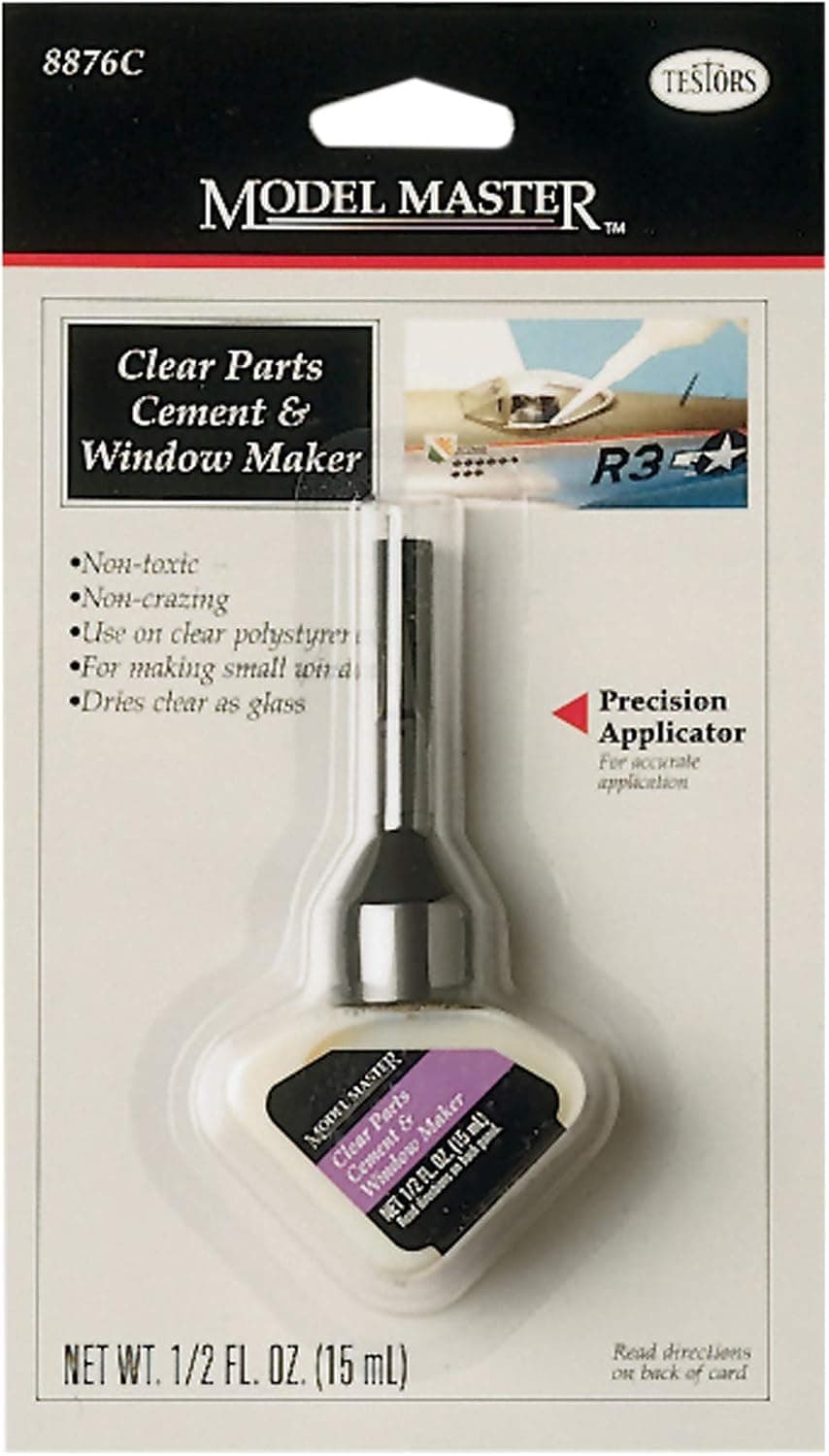
Testor Model Master 8876C Clear Parts Cement and Window Maker, 1/2 fl. Oz., which also forms small clear windows.
Price range: See on Amazon
What we liked
- + Can form tiny windows across small openings
- + Dries clear for canopies and lights
- + Dual use adds value for scratch-built details
Trade-offs
- - Small 1/2 fl. Oz. bottle runs out quickly
- - Window-making takes practice to avoid bubbles
What it is
Testors Model Master 8876C is a clear parts cement and window maker sold in a 1/2 fl. oz. bottle with a precision applicator built into the cap. It is formulated specifically for clear polystyrene parts such as canopies, windows, windshields and lenses, which regular plastic cement can fog, craze or discolor over time. The formula is non toxic and washes up with water, so a fresh mistake on a canopy can be wiped away with a damp cloth before it sets rather than staining the part permanently. Because the cement is water based rather than a solvent cement, it does not attack the surrounding plastic the way liquid cement can, which matters most on thin, optically clear parts where any clouding is highly visible.
The window maker function
Beyond gluing existing clear parts in place, this cement can be drawn across a small open frame, such as a scratch built cockpit opening or a gap left after modifying a kit part, to form a thin clear film that dries like glass. This lets a builder create small custom windows or canopies that were not part of the original kit, which is useful for kitbashing, diorama work or repairing a part that cracked during construction. The technique takes some practice since the film needs to be applied evenly and given time to dry without dust settling into it, but it gives modelers a way to add glazing where none exists rather than leaving an opening bare.
Where it fits on the bench
This cement is a specialist tool rather than an everyday adhesive for structural joints on a model. It has no gap filling strength and is not meant for attaching wings, wheels or other load bearing parts, where a standard plastic cement or epoxy does that job better. Its role is narrow and specific, holding down and glazing clear parts where visual clarity matters more than bond strength. Builders working on aircraft, cars or armor kits with separate clear sprues will reach for it regularly, while builders who rarely touch clear parts may only need a bottle once every few kits, which is worth weighing against the small fill volume.
Practical considerations
The 1/2 fl. oz. bottle is small, and because the applicator tip draws directly from the bottle, careless handling can lead to spills or an applicator that clogs if left uncapped for stretches between uses. Modelers who build often should expect to replace the bottle periodically rather than treating one purchase as a lifetime supply. Storage away from heat helps keep the water based formula from thickening prematurely. Because it dries clear rather than white or hazy, mistakes are less forgiving to spot after the fact, so a slow, controlled application with minimal excess is the safer approach on visible canopy seams.
Bottom line
For builders who need a dedicated way to mount clear canopies, windows and lenses without clouding them, and who also want the option to glaze small scratch built openings, this cement earns its place in the toolbox. It is not a general purpose glue, has little structural strength, and the bottle is modest in size, so pair it with a standard plastic cement for structural joints. Expect to restock the small bottle if clear parts, canopies or scratch built glazing come up often in your builds, since a single 1/2 fl. oz. bottle will not last through many kits for a modeler who works on clear parts regularly.
Frequently asked questions
Can this be used as a regular plastic cement for structural parts?
No, it is formulated for clear parts and has little gap filling strength, so standard plastic cement or epoxy is a better choice for structural joints like wings or wheels.
Will it fog or craze clear canopies?
It is formulated to avoid the crazing and yellowing that some solvent cements cause on clear polystyrene, which is the main reason modelers choose it for canopies and windows.
Can it be used to make new windows that were not part of the kit?
Yes, it can be drawn across a small open frame to form a thin clear film that dries like glass, though even application takes some practice.
How is cleanup handled if I make a mistake?
The formula washes up with water, so excess cement can be wiped away with a damp cloth before it dries.
Prices change often, so check the current price and availability on Amazon.
Check price on AmazonModel Build Lab may earn a commission from the link above.